
Growth & updates
Roblox Home recommendations: action plan
First locate the changed stage: impressions, plays after an impression, or the behavior of players who joined. Then separate acquisition source, cohort maturity, and audience composition. This sequence cannot promise another distribution wave, but it keeps the next change tied to an observed cause.
Action essentials
Seven actions in priority order
Use one diagnostic question per cycle. Save the date, metric definition, and available breakdowns. If the dashboard cannot provide a joint breakdown, keep that as a limitation instead of filling the gap with an assumption.
Do not use a universal waiting period or fixed impression threshold: Roblox publishes no such ladder. When a blended metric changes after expansion, inspect results inside old and new segments. If the required joint breakdown is unavailable, narrow the wording to an observed coincidence instead of claiming that a new country harmed the game.
End the cycle with one decision: retain the set, repair entry, localize one step, or keep observing. State what new evidence would cause the team to reconsider that decision.
- Separate Home, Sponsored, Search, Friends, and other sources before explaining a blended average.
- Check impressions, PTR, first-play bounce, and post-join behavior over matching windows.
- Prepare the first loop, analytics, and stability before scaling inflow.
- Compare countries as mature cohorts without inventing a market ladder.
- Decompose the average into mix and within-segment performance.
- Fix localization or performance only where evidence points.
- Record the decision and next bounded test, preserving unknowns.
Primary sources
Put this into practice in MARPLA
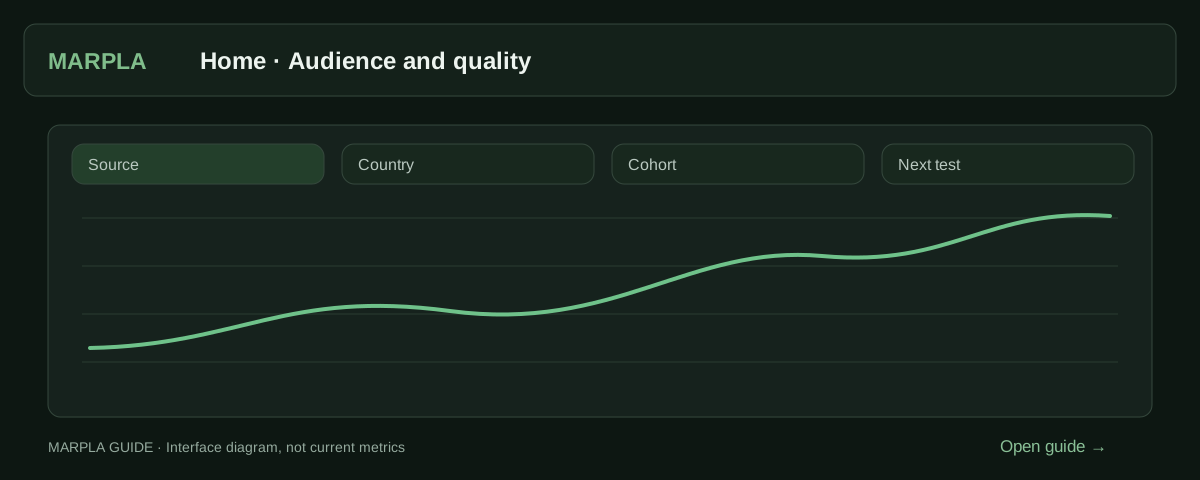
Separate organic Home from other sources, inspect countries and supported joint breakdowns, then relate audience changes to Home set history and record a hypothesis in a note.
- Investigate Home and new audiencesCheck source, countries and cohort maturity to separate audience-mix changes from a worse game experience.Step-by-step guide →
- Compare audience composition and qualityCompare a complete period with its predecessor and separate audience mix change from within-segment metric change.Step-by-step guide →
- Compare Home creatives and setsDistinguish set changes from statistics days.Step-by-step guide →
Where this deep dive applies
Continue exploring
More on this topic →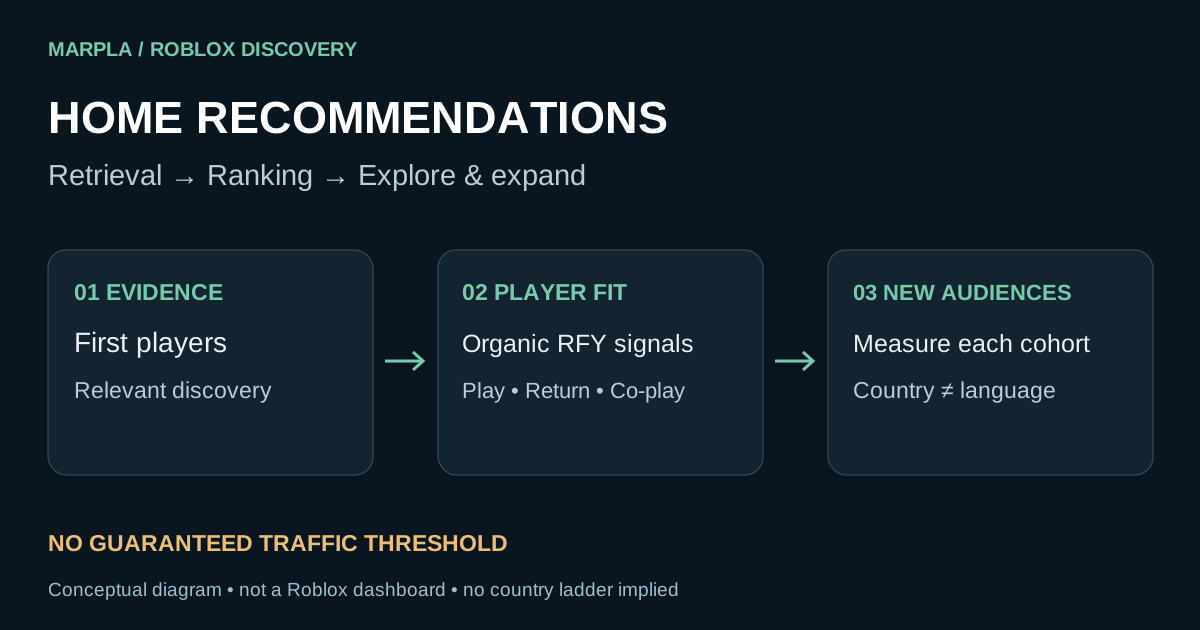
Roblox Home recommendations: get discovered and sustain growth
How Roblox tests and expands Home recommendations, what signals matter, and how to diagnose country mix and falling metrics with MARPLA.
Read article
Roblox Home PTR and early exits: find the weak stage
A diagnosis of impressions → play → first session without mixing metrics.
Read article
Roblox country cohorts: explain audience-mix changes
A practical country-mix analysis without invented thresholds or country-quality labels.
Read article
Discussion0
Loading comments…