
Growth & updates
MARPLA growth radar essentials
Use the radar to find games whose public observations deserve review, not to predict guaranteed winners. The signal combines multiple indicators and explicit data-quality penalties; its 0–100 value orders attention. Open the candidate card to see the component evidence, coverage, risks, observed peak, stage history, and public creator context.
Action essentials
Move from signal to decision card
Filter by age, genre, scale, Visits ceiling, or the observed 24-hour CCU-to-Visits ratio. Confirm that recent growth has adequate coverage and is not a short spike. Review absolute change, 24-hour and 7-day context, favorites, votes, update timing, and the direct game experience.
Signed-in users can save a private stage, contacts, notes, and next-action date. The useful output is a queue with an owner, review date, and decision rule. Public momentum can support contact or further diligence; it cannot establish revenue, retention, ownership of assets, or a fair acquisition price.
Review the score version with the card. A future model can reorder candidates without changing the public observations that supported the original decision.
- Filter for a concrete thesis.
- Open the score evidence and risks.
- Play-test and seek a second signal.
- Save the next action or pass with a reason.
Primary sources
Put this into practice in MARPLA
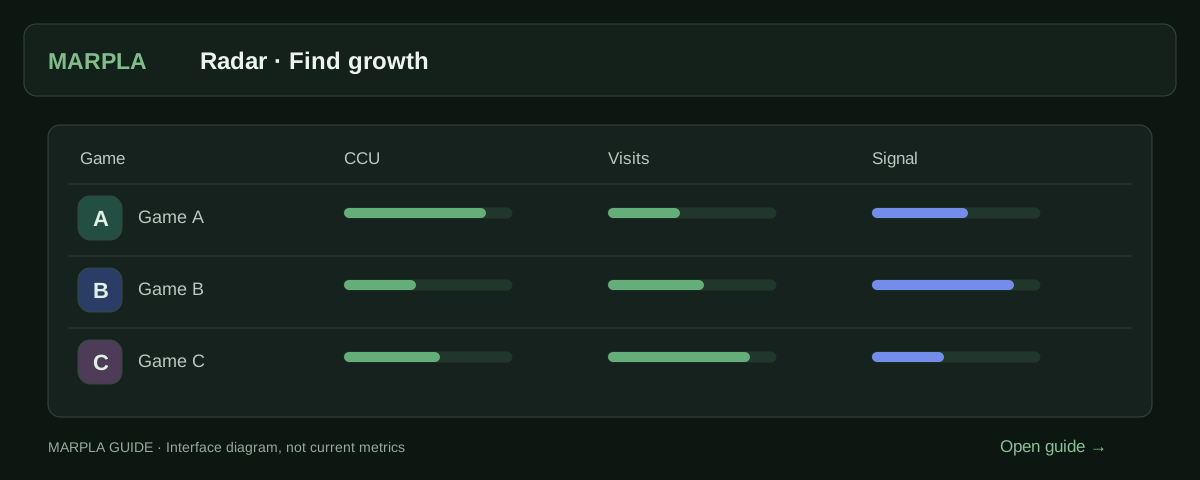
Set radar filters and inspect the evidence behind candidate signals. Confirm the movement with saved history, then retain promising games for monitoring.
- Choose a promising gameThe radar helps you shortlist games to watch and discuss with your team.Step-by-step guide →
- Follow game updatesMonitoring builds project history for later comparisons.Step-by-step guide →
Where this deep dive applies
Continue exploring
More on this topic →
How to find growing Roblox games: signals and a candidate card
Shortlist growing Roblox games using CCU trends, history, and data coverage. Includes a candidate card, repeat checks, and limits of public analytics.
Read article
MARPLA growth Signal: how to use a 0–100 triage score
What the public-signal score combines, how data quality affects it, and why it is not a probability of success.
Read article
From watchlist to decision: a Roblox research queue
How to turn saved games and public signals into owned actions, review dates, and clear pass criteria.
Read article
Discussion0
Loading comments…