
Comparing games
Fair Roblox game comparisons: the essential checklist
A fair comparison begins with one question and a defensible peer set. Match the product loop, maturity, audience scale, target region, and observation period closely enough for the metric to mean the same thing. A launch-day simulator and a mature roleplay title may both be interesting, but their raw CCU totals do not answer the same operating question.
Action essentials
Compare like with like, then inspect exceptions
Align time zones, weekdays, release windows, and data coverage. Separate level from change: current CCU shows scale, absolute growth shows added concurrent players, and percentage growth shows change relative to the base. Use cumulative counters through increments over matched windows, not raw lifetime totals.
Keep public and owner-only metrics in separate columns. Public observations support a shortlist; authorized retention, acquisition, monetization, and cohort data explain the business. If peer selection or missing data can reverse the ranking, report the result as sensitive and schedule another check rather than declaring a universal winner.
Archive the peer rules with the result. A future reader should be able to repeat the ranking without knowing which game you hoped would win.
- State the comparison question.
- Choose peers using written inclusion rules.
- Align windows, timestamps, and coverage.
- Report level, absolute change, percentage change, and limitations together.
Primary sources
Put this into practice in MARPLA
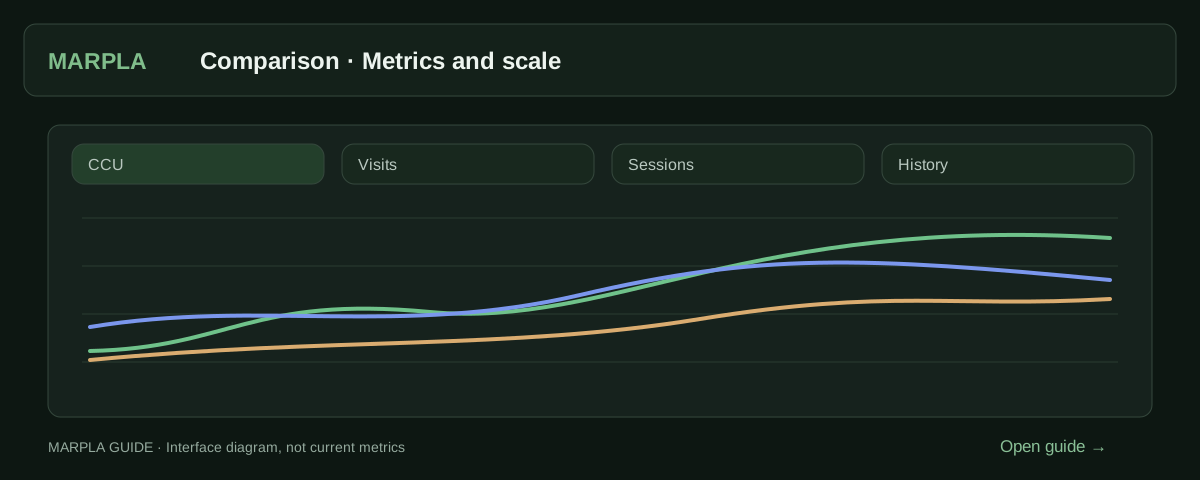
Add comparable games to Comparison and select a common period. Check observation coverage and distinguish public session estimates from private owner metrics.
- Compare gamesCompare how several projects perform over the same period.Step-by-step guide →
- Start analyzing a gamePublic analysis helps you explore a game's audience, activity and rating.Step-by-step guide →
Where this deep dive applies
Continue exploring
More on this topic →
How to compare Roblox games fairly
Build a peer set, align time windows, normalize scale, and keep public comparisons within what the data supports.
Read article
Comparable peers and matched windows for Roblox analysis
How to define a peer set and align observation windows before ranking Roblox games.
Read article
A public-data evidence ledger for Roblox research
A reusable record for sources, timestamps, definitions, inference, limitations, and decisions.
Read article
Discussion0
Loading comments…